
Sigiriya Rock – The Eighth Wonder of the Ancient World
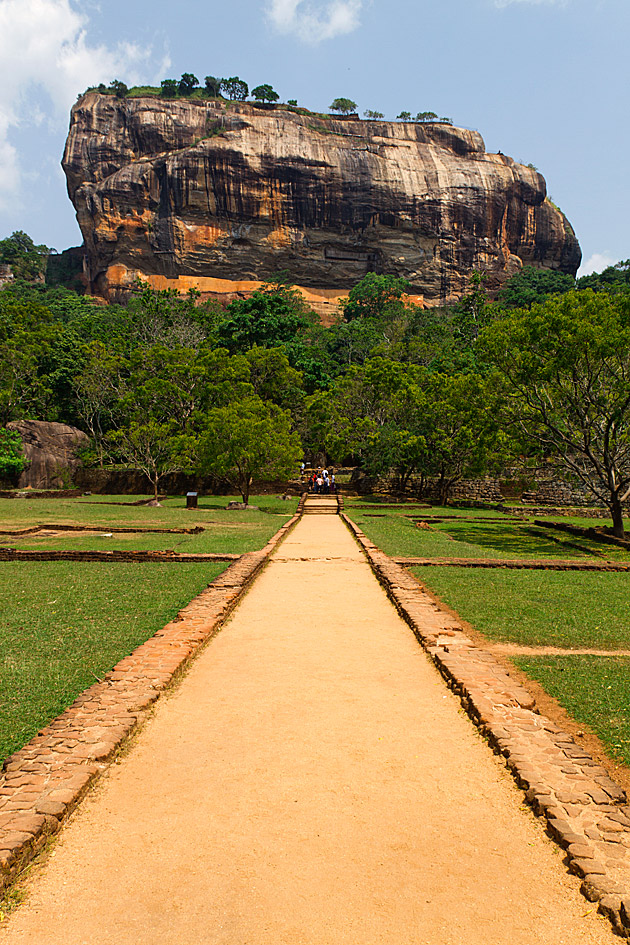
Nature’s awesome beauty and the ingenuity of mankind come together majestically at Sigiriya Rock. A massive 320-meter granite stone set incomprehensibly in the jungle, the “Lion Rock” was attracting admiration long before King Kassapa built his castle on top of it, and continues dropping jaws today.
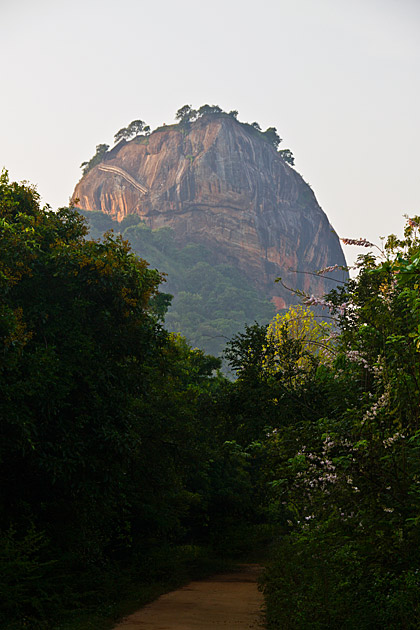
Sigiriya is probably the top touristic sight in all Sri Lanka, and for good reason. There is an incredible amount to see here, the history is fascinating, the ascent to the summit is an attraction in itself, and from the top, among the ruins of an ancient palace, the view over the surrounding jungle is unimpeded and breathtaking. A visit to Sigiriya is truly unforgettable.
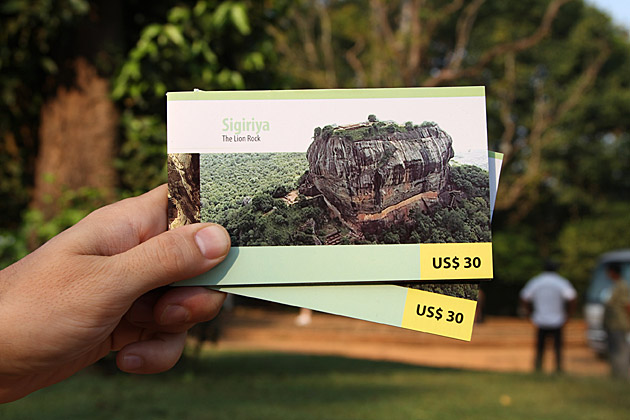
And Sri Lanka knows it. The government charges $30 a head to enter the site. Unless, of course you’re Sri Lankan, in which case you’ll pay $0.40. We almost balked at the price. I understand charging locals less than tourists, but the scale of the difference is outrageous. Yes, foreigners might have more disposable income than Sri Lankans, but 75 times the price? The biggest slap in the face comes when you learn that Sigiriya is mostly funded by UNESCO and other foreign entities. So guess what? Foreigners are already paying for the maintenance and running of the site, and then they’re charged 75 times the normal entry fee. It’s insulting.
But Sri Lanka has a monopoly on the world’s supply of “Sigiriya Rocks”, so we swallowed our pride and bought tickets. I’m glad we did. Once we got done grumbling about the unfairness of it all, we had an incredible day.
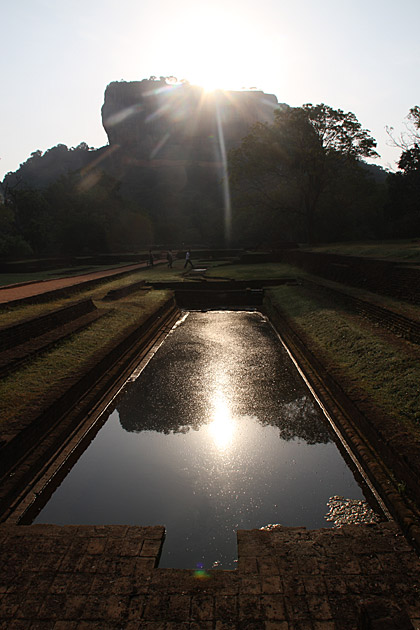
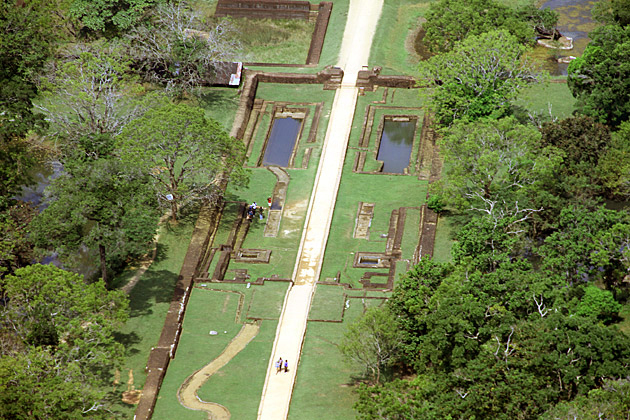
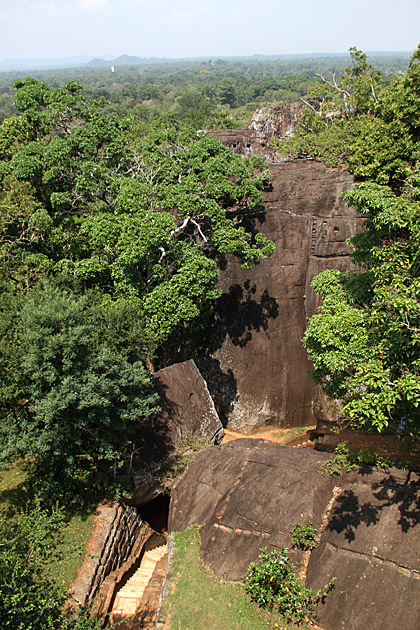
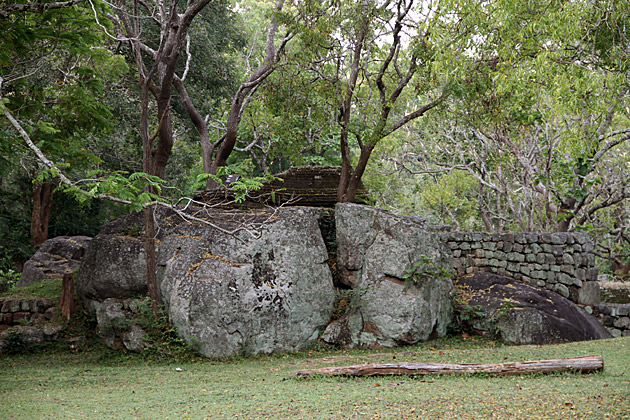
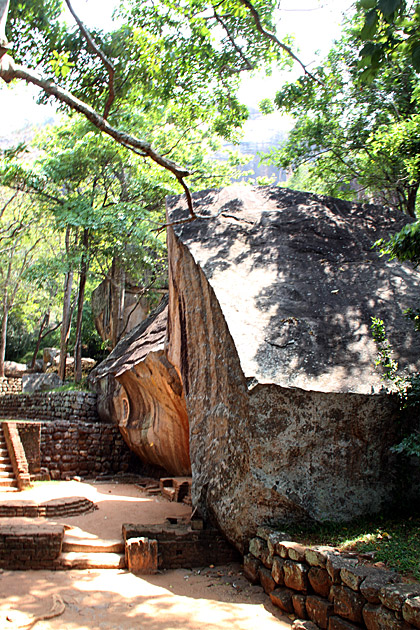
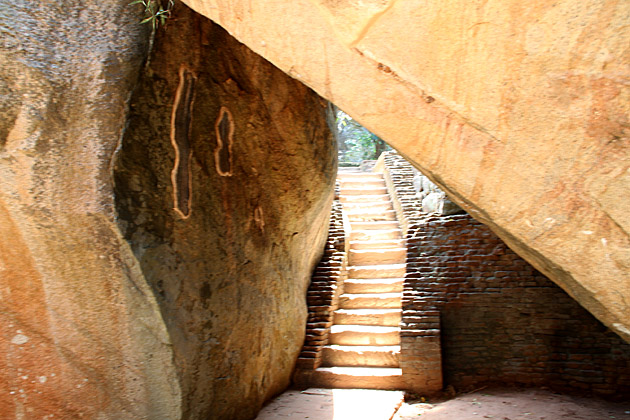
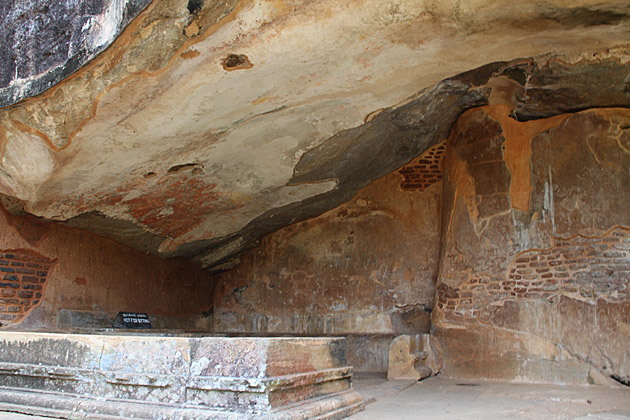
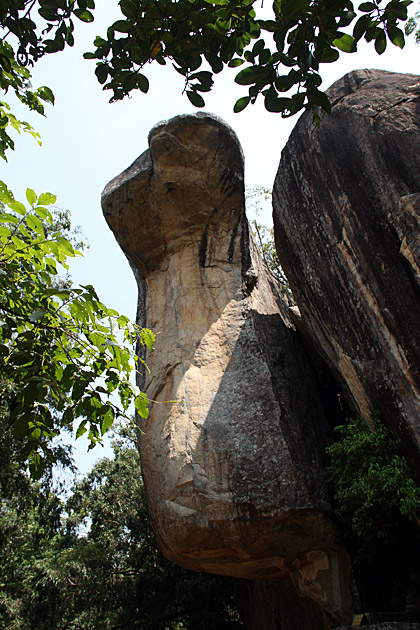
After crossing the moat to enter the grounds, you’re greeted by the marvelously restored 5th century pleasure gardens of King Kassapa. First, a Water Garden with an expansive and complicated set of pools and ponds, and further ahead the King’s Boulder Garden. Here, we saw the Cobra-Hooded Cave and talked with an archaeologist at work on a dig. His team was unearthing a cave temple, and he was more than happy to take a break to chat. Long before Kassapa’s arrival, Buddhist monks had considered Sigiriya a sacred place, and built temples around the base of the rock. Kassapa relocated the monks to nearby Pidurungala Rock, where they remain to this day.
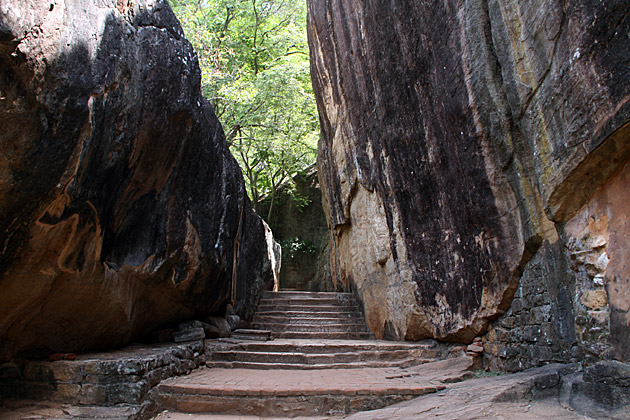
We started our ascent up the Lion Rock at 7am in the morning, well before the sun was at full strength. This was a wise decision; we avoided both heat stroke and the eventual onslaught of tourists. We were able to climb unhurried and took our time admiring the scenery. By noon, bus after bus had pulled up to the gate. Already on our way back down, we watched a never-ending single-file line of sweaty, sun-beaten tourists with amazement and despondency. To be caught in the middle of that would have been a nightmare! I estimated about 200 people ascending the stairs at one time. I have no idea how many people visit Sigiriya daily but the government must be raking it in. So a word to the wise: go as early as you can. The gates open at 7, and you’ll have the rock largely to yourself.

Midway up, we encountered the Mirror Wall and the Hall of Maidens. The rock at the Mirror Wall had been polished smooth and flat and coated with a shiny plaster, so that the King could admire his reflection during his ascent. Facing the west, the wall must have shone brilliantly during sunset, and was perhaps meant as a sort of beacon, announcing the palace and the eminence of its king. Today, though, the luster is gone and it looks basically like a stone wall. Maybe a little flatter than normal. Much more impressive is the fresco gallery, found just above the Mirror Wall. The Damsels of Sigiriya are some of the most famous ancient paintings in the world, in a miraculous state of conservation.
After the Mirror Wall and damsel gallery, we emerged at a large terrace. We were exhausted and stunned to see that we had only completed about half our journey. Before us, two immense lion paws carved out of the rock indicated the beginning of the ascent’s second half. Under the pretense of admiring the lion, we took take a break before climbing up to the summit.
The Sigiriya Rock on our Sri Lanka Map



Pingback: The Mulkirigala Rock Temple | For 91 Days in Sri Lanka – Travel Blog
Tourists should pay that much of money. It’s he eight wonder of the world and it’s our history.We have to demand. English people destroy our history and our tresures when the ruled our country..So they have to pay it back.. If this is in a foreign country will they allow Sri Lakan to go for 0.40$ ??
Great Britain is one nation out of dozens who visit Sri Lanka. And no, regular tourists don’t have to pay it back because we have 0 zero connection to colonialism that existed a long time ago.And of course they wouldn’t let you for $0.40, but you would instead pay the same price as everyone else, no matter the nationality. Yes, I agree with different prices for locals and tourists, but this is simply too much.It’s funny. They teach you English, they teach you about computers and business, but they never teach you how the Western World thinks and functions.
@SudubundaThey’d let you go for the same price as everyone else. In the UK, museums including the British museum and the science museum are free for all. Not just for those of us paying 40% income tax but tourists too.The cost of Sigiriya is ridiculous. You don’t even get a map. You can buy one in the tourist shop. Some are worth paying for but the basic leaflet one is what you’d get included anywhere else. I noticed one of the main funders was Japan. Taking their money and can’t even provide decent lavatory facilities to people paying $30pp.
Dear Daisy,Please dont angry with me, we do not have hate for new generation of the British, this is about what you done with all countries hundreds of years ago…. but about thebritish muesuems, they carry what you have stolen from other countries. you have thousands of our palm leaf books that our ancestors kept their knowladge about universe, medicine, architecture and culture. just to take a photo copy of one page of them we have to pay your government more than one pound !!, and think we need copy of a whole book, it will be more than 100 pounds!! how unfair is that then ? at least its ok if its belongs to your nation, but its all about the knowledge we kept bringing forward for more than 28,000 years of time. four lord buddha’s lived throughout this nation, and Mixal, we had to obey the new science because they have destroyed our path! may be the ticket cost is not fare, what you say is true, a better guidance, a map, and at least a proper guide should be given for the visitors who come down from abroad, they come here because they love it… but isn’t it still better than wasting money at the Disney land I guess ? 🙂
outrageous price diffrence
Agreed its too much so im not going. I think 80% of the other backpackers feel the same. 8th wonder of the world or not (whomever decided that). I have to say i am very turned off at blatantly paying more for everything in Sri Lanka. I will spend a lot less time & money here because of this common practice. I have been backpacking almost 8 years now & i come to expect this to some degree…but i will tell you now, its hurting tourism & the potentia of.